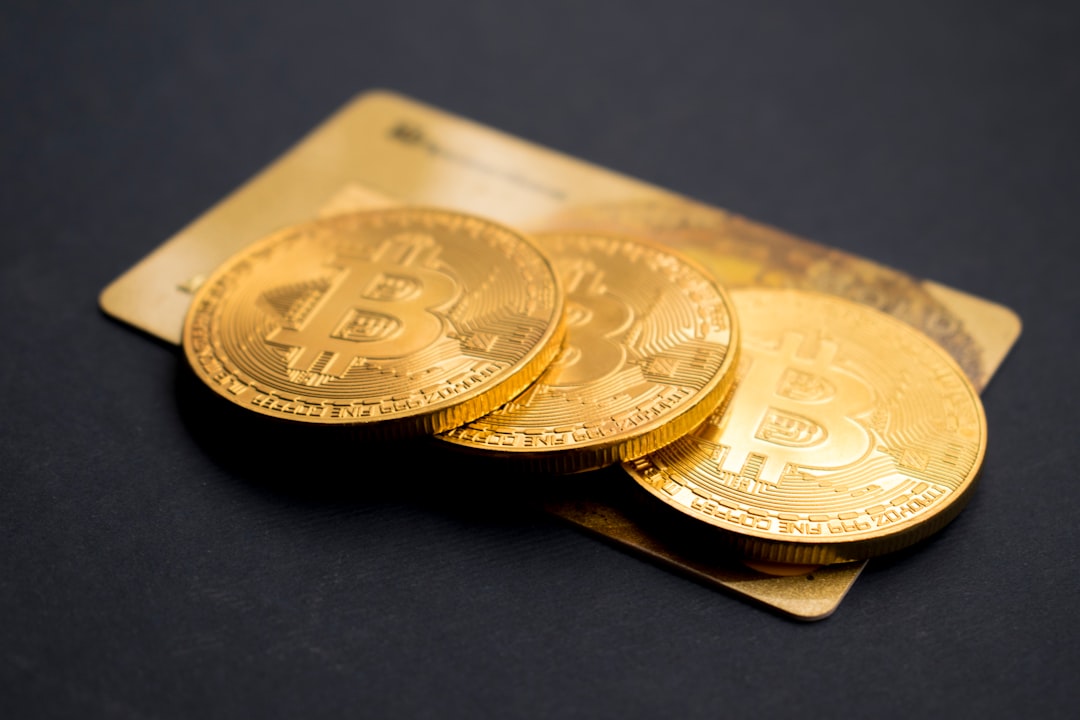
Bitcoin Runes Explained: A Beginner's Guide
When people hear "tokens on Bitcoin" they often assume it means something grafted onto Bitcoin that does not quite belong. BRC-20 tokens had that feel. They were clever, but they were hacky. Runes are different, and I want to explain why.
UNIT, the stablecoin you borrow when you use Ducat, is a Rune. That is not a marketing choice or a technical detail to bury in a whitepaper. It is central to what makes Ducat genuinely Bitcoin-native rather than a product that uses Bitcoin as collateral but lives somewhere else.
What are Bitcoin Runes?
Runes are a fungible token standard for Bitcoin, created by Casey Rodarmor and launched in April 2024 alongside the Bitcoin halving.
Casey also created Ordinals. If you followed the Ordinals story, you know the context: Ordinals attached data to individual satoshis using Bitcoin's Taproot upgrade, enabling NFT-like inscriptions directly on-chain. BRC-20 tokens followed as an attempt to create fungible tokens using Ordinals, but the implementation was inefficient, creating large amounts of unspent transaction output (UTXO) bloat.
Runes take a different approach. Instead of using satoshis as the unit of account for tokens, Runes store token data in OP_RETURN outputs. Each Rune has a name (like UNIT), and balances are tracked in transaction outputs. The protocol is simpler, more efficient, and does not create the UTXO bloat that plagued BRC-20.
Why OP_RETURN?
OP_RETURN is a Bitcoin script opcode that lets you attach up to 80 bytes of arbitrary data to a transaction output. The output is provably unspendable, so nodes do not need to track it in the UTXO set. Miners include it in the blockchain, but it does not bloat the system.
Runes use OP_RETURN to store the information about token transfers: which Rune, how many units, which output they are being assigned to. Bitcoin nodes that understand the Runes protocol can read this data and track balances accordingly. Bitcoin nodes that do not understand Runes simply see valid Bitcoin transactions.
This is an elegant design. Runes are invisible to software that does not speak Runes, and fully auditable to software that does. There is no fork, no new consensus rule, no change to Bitcoin itself.
How Runes differ from BRC-20
BRC-20 tokens tracked balances by attaching JSON data to Ordinal inscriptions. Each transfer required specific inscription patterns. The result was valid but wasteful: many small UTXOs, complex off-chain indexing requirements, and transactions that ate into block space disproportionately.
Runes tracks balances in OP_RETURN data with a compact encoding. A single transaction can move multiple Rune balances efficiently. The indexing is cleaner. The UTXO impact is minimal.
This matters for a stablecoin. UNIT needs to be transferred frequently, in small and large amounts, by users who want predictable fees. A bloated token standard would be a practical problem, not just a technical one.
UNIT as a Rune
UNIT is the Ducat Protocol's stablecoin. It is collateralised by Bitcoin held in non-custodial vaults, and it is issued as a Rune on Bitcoin Layer 1.
When you deposit BTC into a Ducat vault and borrow UNIT, you are receiving a Rune token. When you repay your loan, you return UNIT and your BTC vault is released. The stablecoin lives on the same chain as your collateral. There are no bridges, no wrapped assets, no separate chain tracking your balance.
This is why I describe Ducat as Bitcoin-native in a way that most "Bitcoin DeFi" products are not. Most of them use Bitcoin as collateral but run the protocol on another chain. Your BTC crosses a bridge, becomes a wrapped token, and your loan is managed by an Ethereum smart contract. You have Bitcoin-denominated collateral, but the system itself is not on Bitcoin.
Ducat is different. The collateral is Bitcoin. The stablecoin is a Rune on Bitcoin. The vault logic runs on Bitcoin. From end to end, you stay on Layer 1.
What this means for Bitcoin DeFi more broadly
The Runes launch in April 2024 changed something. It was the first moment where Bitcoin had a credible, efficient fungible token standard with a real ecosystem forming around it.
The combination of Runes for token issuance, Taproot for more complex script conditions, and protocols like FROST for secure vault custody creates the building blocks for financial applications that were not practical on Bitcoin before.
I wrote about how Bitcoin DeFi has evolved in our BTC DeFi in 2026 overview. Runes are a foundational layer in that story.
If you want to understand how UNIT maintains its peg and how the collateralisation model works, the BTC-collateralised stablecoins guide covers that in detail.
The fee question
I get asked about this regularly. If Runes live on Bitcoin L1, do you not pay Bitcoin-level fees for every token transfer?
Yes. You do. Every UNIT transfer is a Bitcoin transaction and pays a miner fee accordingly. During high-demand periods, those fees spike. In April 2024, around the halving, some Rune transactions cost over $50 in fees.
My honest view: for a stablecoin backed by Bitcoin collateral, that is an acceptable trade. You are not buying coffee with UNIT. You are borrowing against your savings. The security of settling on L1 is worth more than saving a few dollars in fees.
Over time, fee efficiency will improve. Batched transactions, better UTXO management, and protocol-level optimisations will bring costs down. Even now, most UNIT transactions during normal fee periods cost a few dollars. Comparable to a wire transfer, and faster.
What comes next for Bitcoin Runes
The Runes protocol is still young. The Runes specification has been updated several times since launch. Indexer infrastructure is maturing. Wallet support is expanding. DEX liquidity for Rune tokens is growing.
I think we are still in the first chapter. The protocols being built on Runes now will define what Bitcoin-native finance looks like for the next decade. Stablecoins, governance tokens, and protocol-native assets are just the beginning.
Bitcoin was never "just money." It is programmable money. Runes make that programmability accessible for fungible tokens. The question is no longer whether tokens belong on Bitcoin. It is what we build with them.
Open a vault and borrow against your BTC →
David Evans is the founder of Ducat Protocol. UNIT is a live Rune on Bitcoin mainnet. Nothing in this post is financial advice.